
E-Bikes, E-Motos, and the Rules of the Road |
The Future of Transportation: Navigating the Roads with E-Bikes and E-Motos. |
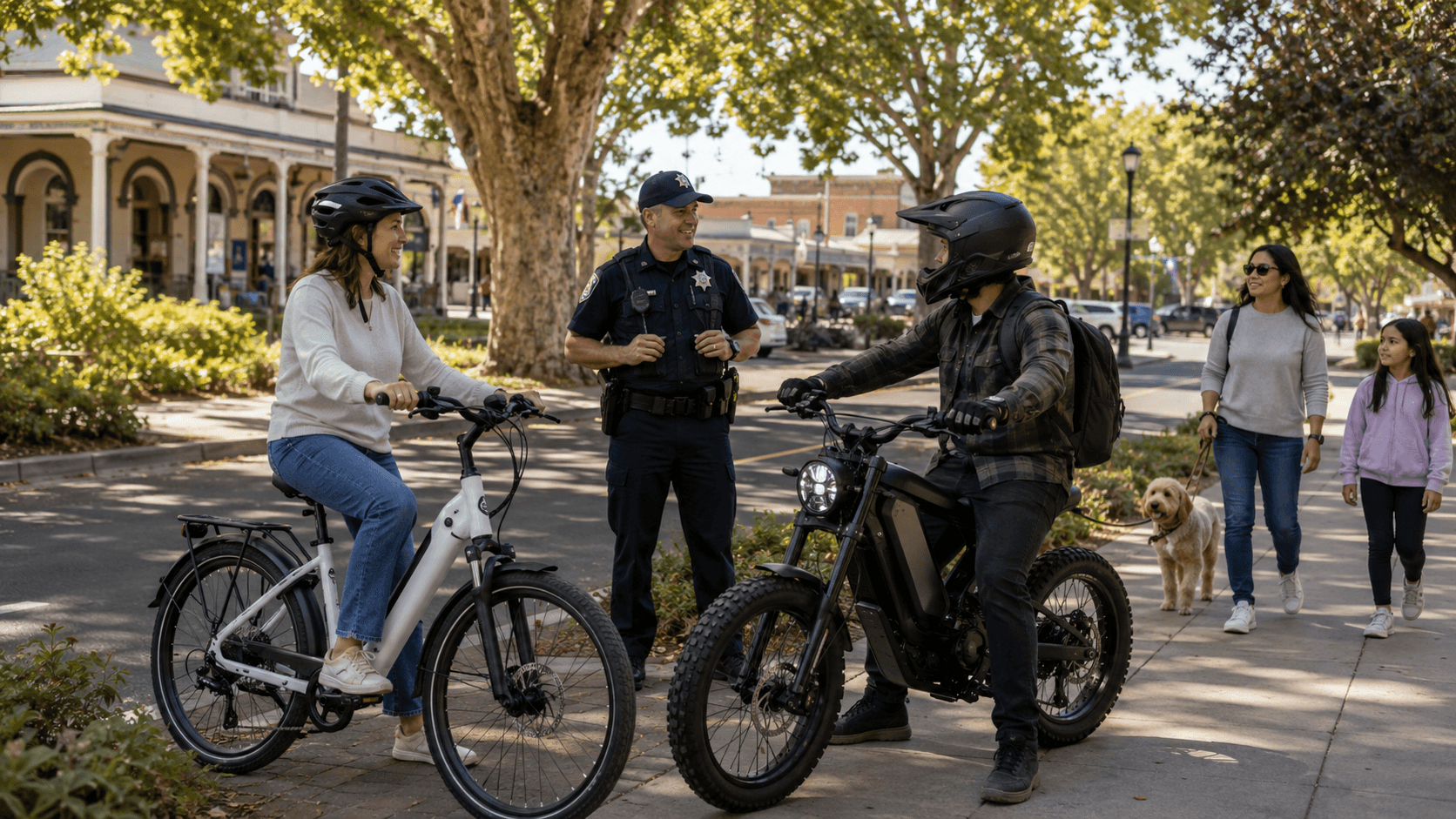
You have probably noticed them. The bikes are quieter than a motorcycle and faster than they look, threading between pedestrians on the bike path or holding traffic speed on a side street. Some are ordinary electric bikes. Some are not. The difference matters more than it used to, and not just for safety. A growing number of these machines are not legally bikes at all. They are motorcycles wearing bicycle clothing — and the rules that apply to them are very different from the ones most riders assume. Here is a plain guide to what’s allowed, what isn’t, and how the city is choosing to handle it. The three legal classes, in plain termsCalifornia sorts legal e-bikes into three classes. As the Press Democrat reported, Sonoma Police Chief Brandon Cutting laid them out this way: Class 1 tops out at 20 mph and only assists while you pedal. No throttle. Class 2 also tops out at 20 mph but adds a throttle, so it can move without pedaling. Class 3 can reach 28 mph. Riders must be at least 16 and must wear a helmet. Class 1 and Class 2 are allowed on city sidewalks and bike paths. Class 3 is faster and carries the age and helmet rules above. For most families, that’s the whole picture: a normal e-bike, used the normal way. Where it stops being a bikeThe complication is the newer, faster machines often sold as “e-bikes” but built more like small motorcycles — the ones increasingly called e-motos. The line is simpler than it sounds. According to the chief’s explanation, any vehicle that puts out more than 750 watts, or that has no working pedals, is legally a motorcycle — not an e-bike. That changes everything that comes with it: registration, insurance, and an M1 or M2 motorcycle license. Some of these e-motos can reach 38 mph. At that speed, on a shared path next to someone walking a dog, the gap between “fast bike” and “motorcycle” is not a technicality. It’s the difference between a close call and a serious one. Why the city is starting with education, not ticketsRather than open the summer writing citations, Sonoma police are leading with education. The goal, as described in local reporting, is to help riders and families understand what they’re actually riding before enforcement becomes the tool. That’s a reasonable place to start. Many of these machines are bought without anyone — buyer or seller — being clear on the legal line. A teenager on an e-moto may have no idea it’s classified as a motorcycle, and neither may the parent who bought it. The city has also said it will keep looking at practical fixes: “tasteful” signage and possible lane markings to set expectations on shared trails, where bikes, walkers, and faster machines all share the same few feet of pavement. Worth knowing before you ride
The bottom lineMost people riding electric bikes around Sonoma are doing exactly what the law intends — getting to the Plaza, to work, to school, a little faster and a little greener. The concern is narrower: a fast-growing category of machines that look like bikes, move like motorcycles, and fall under rules most riders never signed up for. Starting with a clear explanation rather than a ticket is the neighborly approach. It works best if the rest of us meet it halfway — knowing what we ride, riding it where it belongs, and giving the people walking beside us room to feel safe doing it. If you ride one of these around town, we’d like to hear how it’s going — where the paths work well, and where they get tense. That’s the kind of thing a local paper should be paying attention to. Sources: Press Democrat — Sonoma police turn to e-bike safety education over enforcement (June 15, 2026); Press Democrat — Sonoma County cities seek to curb illegal e-scooter/e-bike use among youth (March 5, 2026). |
0 Comments
Join the conversation
Be the first to comment
Share your thoughts above.