
Sonoma History and Its Enduring Legacy in Sonoma, California |
Explore the story behind the Bear Flag Revolt and Sonoma Plaza |
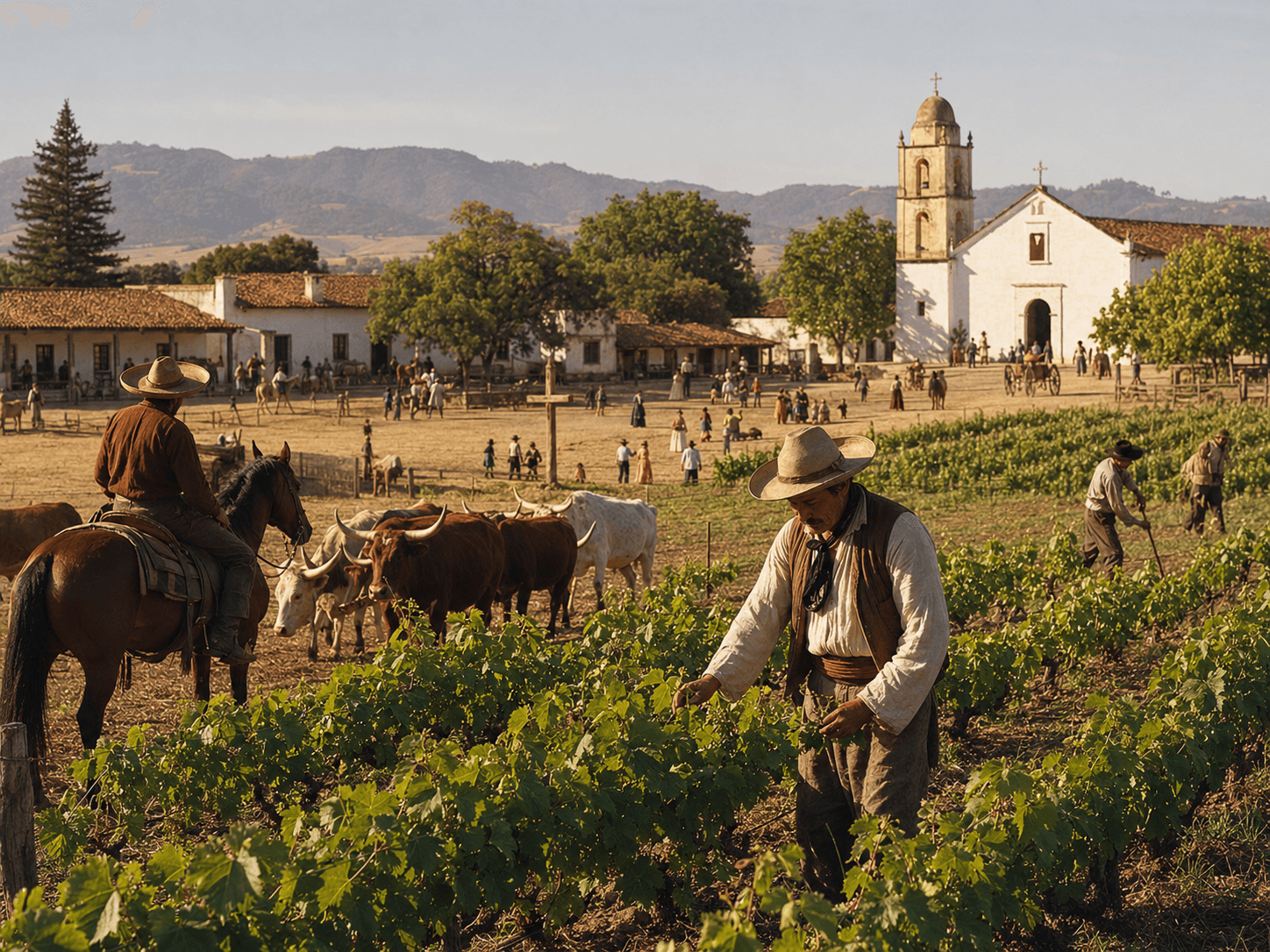
Sonoma’s story reaches back thousands of years, long before the establishment of the mission, pueblo, or modern city.
The Sonoma Valley and surrounding region were home to Indigenous communities, including Coast Miwok, Southern Pomo, Wappo, Patwin, and Suisun peoples, whose cultures and relationships with the land long predated European settlement.
The Founding of Mission San Francisco Solano
Mission San Francisco Solano was established on July 4, 1823, by Father José Altimira.
It became the northernmost and final mission in California’s chain of 21 Franciscan missions—and the only California mission founded after Mexico gained independence from Spain.
Its location also served a strategic purpose. Mexican officials wanted to strengthen their presence along the northern frontier amid concern about Russian expansion from Fort Ross on the Pacific coast. The mission system brought profound disruption to the region’s Indigenous peoples. Native residents were relocated or compelled to live and work at the mission, where disease, forced labor, displacement, and cultural loss caused lasting harm.
Vallejo and the Creation of Sonoma Plaza
Following the secularization of California’s missions, Mariano Guadalupe Vallejo was sent north to oversee Mexican settlement and military operations.
In 1835, Vallejo founded and developed the Pueblo of Sonoma around a large central plaza based on traditional Spanish and Mexican town-planning principles.
The plaza became the center of community life, while the nearby Sonoma Barracks housed troops responsible for protecting Mexico’s northern frontier.
Sonoma’s fertile soil and Mediterranean climate supported cattle ranching, grain production, orchards, and early vineyards, helping establish the agricultural foundation that would later define the region.
The Bear Flag Revolt
On June 14, 1846, a group of American settlers entered Sonoma, arrested Vallejo, and proclaimed an independent California Republic during what became known as the Bear Flag Revolt.
William B. Ide emerged as one of the revolt’s principal leaders. The California Republic lasted only a few weeks before United States forces raised the American flag over Sonoma during the Mexican-American War.
Although Vallejo had favored closer political and economic ties with the United States, he was imprisoned during the revolt. He later participated in California’s 1849 Constitutional Convention and served in the new state’s first Senate.
Sonoma Becomes a City
Sonoma was first incorporated on April 4, 1850, making it one of California’s earliest incorporated communities. That incorporation was dissolved in 1862, and the city was permanently reincorporated in 1883.
The Rise of Sonoma Wine Country
Agoston Haraszthy founded Buena Vista Winery in 1857, helping transform Sonoma Valley winegrowing into a larger and more ambitious commercial industry.
Grapes and wine had already been produced in the region, but Haraszthy expanded production, experimented with European grape varieties, and promoted California wine on a broader scale. His work helped establish Sonoma Valley as one of the state’s most important early wine regions.
Railroads Open Sonoma to New Markets
Railroad development during the late 1870s and 1880s connected Sonoma Valley more closely with Bay Area transportation networks. These links allowed farmers and winemakers to reach larger markets while also making the valley more accessible to visitors and tourists.
City Hall Becomes the Heart of the Plaza
The cornerstone of Sonoma City Hall was laid in 1906, and the building was dedicated in 1908.
Designed by architect Adolph C. Lutgens, the basalt-stone Mission Revival building features four nearly identical facades and sits at the center of Sonoma Plaza.
Its location ensured that no single side of the plaza would be considered the “back” of the building.
Architecture That Reflects Sonoma’s Past
Sonoma’s buildings reveal the many eras that shaped the city. Historic architecture includes:
The Mission San Francisco Solano site also requires some historical context.
Several churches occupied the mission property over time, and Vallejo ordered a smaller adobe chapel built in 1841 after an earlier structure deteriorated.
The chapel visible today was extensively reconstructed during the early 20th century, although portions of the adjoining mission buildings retain historic materials.
A Historic Plaza with Modern Energy
Sonoma Plaza continues to serve as the city’s civic, cultural, and commercial center.
In May 2026, chef Ari Weiswasser and his partners opened Smash at 497 First Street West.
The fast-casual restaurant serves smashburgers, fried chicken sandwiches, fries, tater tots, and milkshakes, bringing a contemporary dining experience to the historic plaza.
The city has also continued improving public amenities around the square.
In June 2025, Sonoma announced the completion of new wooden seating at the Grinstead Amphitheater.
The project used redwood lumber donated through a partnership in which Sonoma Raceway helped arrange materials valued at more than $24,000.
Where History and Community Meet
From its Indigenous foundations and Mexican frontier history to the Bear Flag Revolt, the development of commercial winemaking, and today’s lively downtown, Sonoma reflects many layers of California history. Through every era, Sonoma Plaza has remained the physical and symbolic heart of the community—a place where the city’s past and present continue to meet. |
0 Comments
Join the conversation
Be the first to comment
Share your thoughts above.