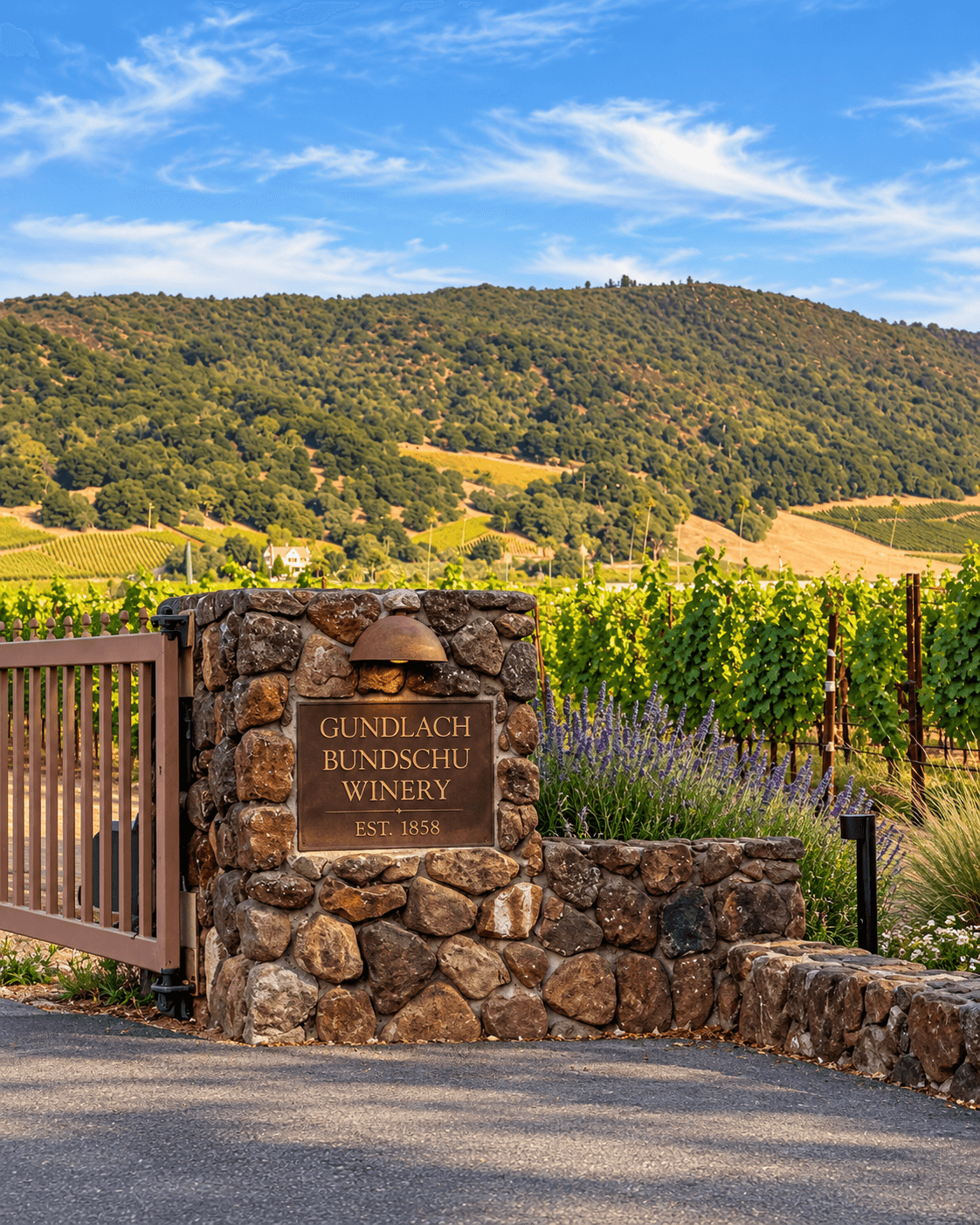
If you've driven out Denmark Street lately, you might be wondering what Gundlach Bundschu's news means for one of Sonoma's most beloved places. The short answer: the tasting room is open.
On September 23, the winery, founded in 1858, filed for Chapter 11 bankruptcy protection. Chapter 11 lets a business keep operating while it reorganizes its debt, and the winery says it will keep welcoming guests, hosting events, serving wine club members, and working with its employees, growers, and vendors throughout the process.
How did a winery that's been here since before the Civil War get here? Part of the strain goes back to 2020, when the company borrowed to buy a 60-acre winery and vineyard in Glen Ellen. Then the wine business turned: shifting habits, falling demand, distributor consolidation, and too much inventory across the industry. The winery cut spending by about 40% over three years, but says the debt was still too heavy for today's market. When one of its lenders asked a court to appoint a receiver, the family turned to Chapter 11.
What happens next: talks are underway with a large investor who hasn't been named, and the family expects to keep a minority stake. If that deal goes through, the Bundschus would no longer hold majority control, and the winery could lose its title as California's oldest continuously family-owned winery.
This place has weathered a lot: phylloxera in the 1870s, the 1906 earthquake, Prohibition. It's also woven into Sonoma's own traditions. The very first Vintage Festival, in 1897, was a play performed for guests at the Gundlach family's Rhinefarm (more on that in this week's trivia).
Sixth-generation owner Jeff Bundschu put it simply: “This has never been only about a winery.”
If you want to show some local love, the simplest thing is to stop by.
Read the Index-Tribune's coverage → |